Whether you’re expanding a facility, upgrading aging equipment, or launching a new production line, the quality of your process machinery installation will shape everything that follows — safety, uptime, efficiency, and long-term profitability. It’s the work we do every day at Hill Electric, and we know firsthand that the right equipment is only half the equation. Even the best equipment will underperform if it isn’t installed, aligned, and integrated correctly. That’s why process machinery installation deserves the same level of attention as the purchase decision itself.
What Is Process Machinery?
You likely already know what process machinery is — it’s the equipment at the center of your operation, the machines that actually transform raw materials into finished or semi-finished products. Unlike facility systems that support production from the background, process machinery is production. If it changes the state, composition, or form of material, it qualifies.
What varies widely is context. A pasteurizer in a food facility, a distillation column in a chemical plant, and a CNC machining center in a fabrication shop are all process machinery — different industries, different demands, same fundamental principle: convert inputs into outputs efficiently, safely, and consistently.
Common Types of Process Machinery
Broadly speaking, process machinery falls into four categories — mechanical, thermal, chemical, and manufacturing/metal processing — each covering a wide range of equipment from conveyors and compressors to reactors, kilns, rolling mills, and packaging lines.
What matters more than the category, though, is what each type demands at installation. The anchoring tolerances, alignment specifications, controls integration, and calibration requirements vary significantly across equipment types. That’s why installation expertise isn’t one-size-fits-all — and why selecting a contractor with direct experience in your specific machinery type is worth the extra diligence.
Who Performs Process Machinery Installations?
Process machinery installations are not handled by general construction crews. These projects require coordination between specialized trades that understand how to properly set, power, and integrate complex industrial systems.
In most cases, installation work is performed by a combination of the following:
- Millwright companies – These teams are responsible for setting equipment. This includes unloading, rigging, placing machinery, and performing precision alignment to ensure everything is level and within tolerance before startup.
- Industrial electrical contractors – Electrical contractors handle the full scope of power and controls. This includes conduit installation, wire pulls, terminations, motor connections, control wiring, and verifying proper rotation and operation of equipment. Electrical teams are also heavily involved during startup and troubleshooting.
- Industrial mechanical contractors – Mechanical contractors install piping systems, supports, and mechanical connections tied to the equipment. This is critical for process systems involving air, water, gas, or other materials moving through the facility.
- OEM installation teams – In some cases, equipment manufacturers provide their own teams to oversee installation and commissioning. This helps ensure the equipment is installed to specification and maintains warranty compliance.
- EPC (Engineering, Procurement, and Construction) firms – These groups support design, layout, and system integration. They help ensure that electrical, mechanical, and control systems all work together properly and meet the requirements of the overall process.
Selecting the right partner involves more than comparing quotes. Industry-specific experience, safety performance, knowledge of your specific equipment, and the ability to coordinate across electrical, mechanical, and controls systems are all critical to a successful installation.
What Do Process Machinery Installations Cost?
The cost of installing manufacturing process machinery can vary significantly depending on the size and complexity of the project. No two installations are identical, and pricing is influenced by equipment size, foundation requirements, alignment tolerances, electrical integration, facility modifications, and even geographic location.
For major projects, installation can represent anywhere from 15% to 40% of the total equipment cost.
It’s important to recognize that choosing the lowest bid can become expensive in the long run. Improper processing machinery installs can lead to vibration issues, premature bearing failures, misalignment, increased downtime, and even safety hazards. A precision installation minimizes these risks and maximizes return on investment. For an estimate for your work, please reach out to Hill Electric so we can connect you with one of our skilled estimators.
What Makes a Process Machinery Installation Successful?
Successful process machinery installations are the outcome of careful planning, technical expertise, and disciplined execution, like what our teams offer at Hill Electric.
The process begins long before equipment arrives onsite. Teams review specifications, verify foundation requirements, confirm utility availability, and coordinate logistics to prevent costly surprises. Site preparation is equally critical. Foundations must be properly cured and tested, anchor bolts accurately positioned, and structural supports verified. Improper foundation work remains one of the leading causes of long-term machinery performance issues.
Once equipment arrives, rigging and placement require specialized handling, with safety protocols paramount throughout. After placement, precision alignment and calibration are where experienced professionals provide exceptional value – laser shaft alignment, torque verification, system balancing, and vibration analysis all significantly extend equipment lifespan and improve operational stability.
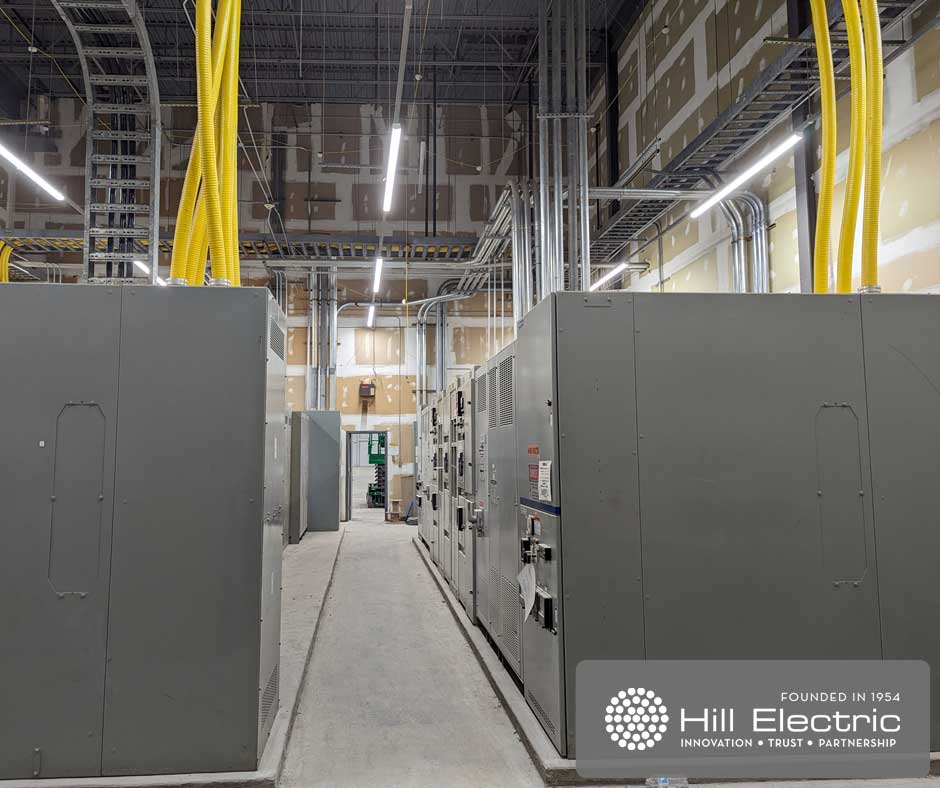
Finally, the machinery must be integrated into the broader facility ecosystem: electrical connections, PLCs and automation systems, piping, safety interlocks, and monitoring systems all need to function seamlessly together. Commissioning and performance testing confirm that the installed equipment meets design specifications and production goals before full-scale operation begins.
Why Professional Installation Matters
Industrial process machinery represents a substantial capital investment. A poorly executed installation can compromise efficiency, increase maintenance costs, shorten equipment life, void warranties, and create safety risks.
On the other hand, a properly executed process machinery installation delivers measurable advantages:
- Greater uptime and reliability
- Improved energy efficiency
- Longer equipment lifespan
- Regulatory and safety compliance
In competitive manufacturing environments, these benefits directly impact profitability.
Final Thoughts
Process machinery installations are complex, technical projects that demand specialized expertise. Whether you are installing metal process machinery in a fabrication facility or implementing a full-scale manufacturing process machinery system in a production plant, the installation phase is just as important as the equipment selection itself.
Strategic planning, experienced installation professionals, and precision execution make the difference between equipment that simply runs and equipment that performs at its full potential.
The companies that get the most out of their equipment are the ones that treat installation as seriously as procurement. If you’re ready to approach your next process machinery project that way, Hill Electric is ready to be your partner. Let’s talk.